Wednesday, December 7, 2016

This is Hard for Me

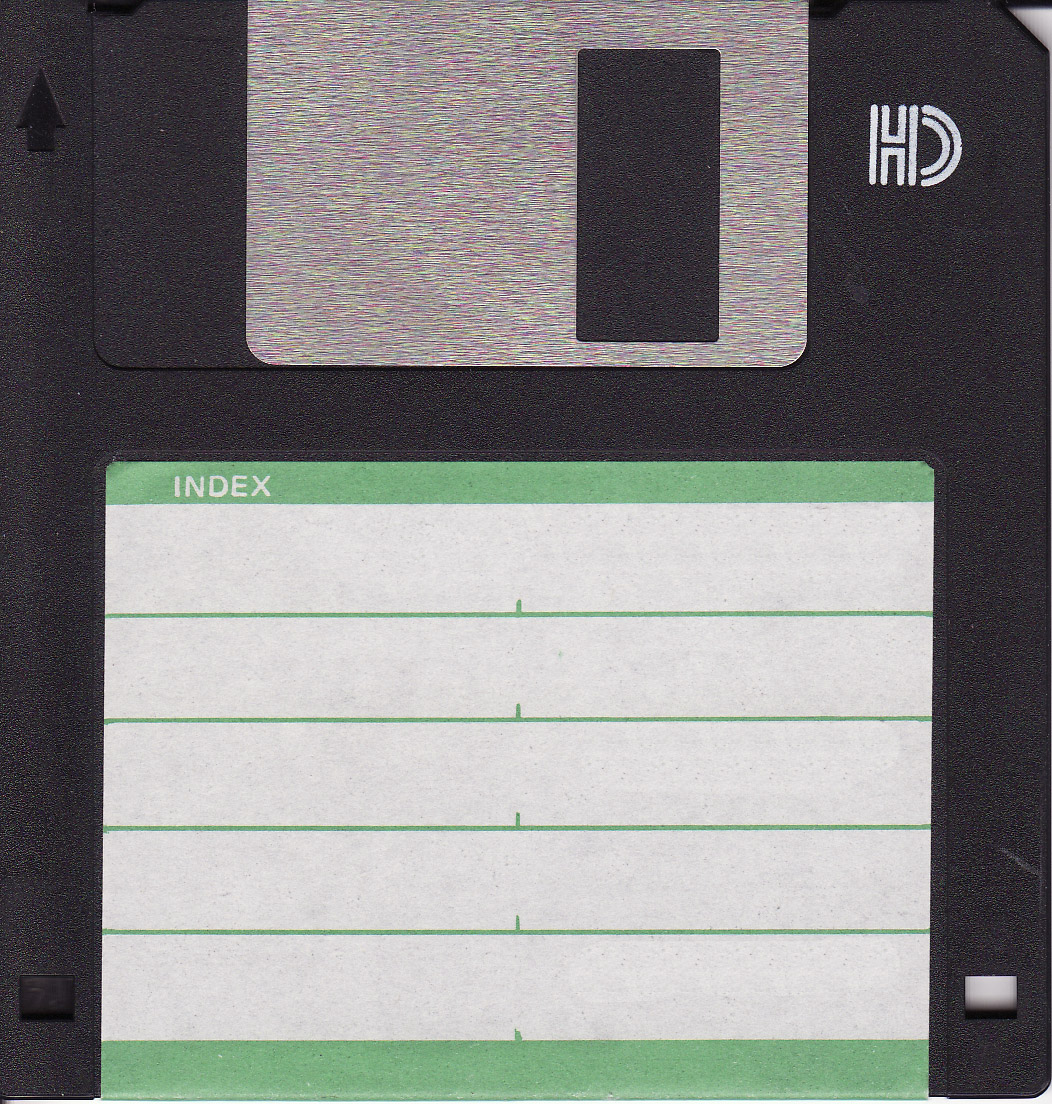
This afternoon we had an impromptu open circle titled "This is hard for me." We sat around and talked about what is hard for us. Most children were very honest. I heard things from math concepts to writing to reading. Several mentioned focusing, following directions, and time management. I admitted I am not a fan of teaching social studies. Sorry to all you history buffs out there but reading about the past is not interesting to me. I explained to the students that I am trying to find ways to make that subject more interesting to us all, which can be challenging. I also shared that I have learned that learning from our past helps us make a better future. I showed them a picture of a floppy disk and asked what it was or what it did. Students said the following: a weight measurer, a computer, a laptop, an IPad case, a USB, a DVD player, a chip, a hard drive chip, and a disc. One students shared he thinks his grandma had one and it was called a something disc. I shared what it was, what it did, and how far we have come. Did any of you think that saving things on a floppy disk would eventually become saving something called a cloud? 


I was proud of our students for being very honest in this talk. I feel like once you admit something is hard for you the weight falls off. We have developed a close and trusting community in a short time because I am not sure how many adults would admit in front of other adults what is hard for them, yet these agents went right for it. I am glad students got to hear other students talk, as now they realize they are not the only ones who think something is hard.

We made two generalizations about our class today.
1. Most students face challenges.
2. Most students persevere when confronted with a challenge.

Not one student in here has told me they cannot do something. They are using the growth mindset vocabulary I am trying to teach. That was evident this afternoon. We reviewed growth vs. fixed mindset, thinking about ways to think rather than be stuck.

I then showed them a Ted Talk. A young girl challenges us all to face what is hard for us and help our children become better adults. We want them to grow up to blow us away, as she comments.

I welcome you all to watch this talk and have conversations with your children about what is hard for them and tell them what things are hard for you. It is an enriching conversation to have!

Tuesday, December 6, 2016

What Do You Think About That?

Yesterday students were tasked with learning about the hierarchy of Pre Columbian Civilizations. I asked them to read through an article I printed out with a group. Then they were to read it through a second time, highlighting important information to share with classmates about their civilization. I asked them to write in the margins why the idea was important. Their ideas will be used in a collaborative slide show where groups will work together to share their info with the class. When I planned this lesson I thought about close reading strategies, collaborative work, and which tools I could use to enhance learning. I did not think about how powerful the reflection conversation would be at the end of our first lesson.

I happened to ask students to share with their classmates some of the information they discovered about their civilization. I had a student share about nobles, another mentioned slaves, a third discussed how woman and children were treated. I then asked a follow up question, more because I was curious about what these ten year olds would say. What do you think about this? Someone blurted out, “That is just do dumb!” So we talked about why the child felt this way. This led into students sharing opinions of life back then compared to life now. It was a raw conversation where students reflected, connected, and drew conclusions. They were honest with themselves and listened to their classmates. It reminded me of a conversation I might have overheard in a coffee shop at UVM where people were expressing their thinking about some hot topic in the news.


I think all children need to be asked what they think. They need practice in respectfully conversing and sharing their opinions on topics. They also need experiences that allows them to grow their confidence skills to share their honest thinking on a topic.

Monday, December 5, 2016

The Evolution of the Student Led Conference

My first year of teaching I had parent teacher conferences. I met with parents, discussing the report card and strengths and weaknesses of their children. The parents would leave, and I would have no idea what message was given to the child about their conference. I thought about how I would wait at the window for my own parents come home from their conference, asking how it went. The feeling of dread would blanket over as I listened to what I needed to work on. Connecting my own experience to that of my third graders, I decided I needed to make the shift to student led conferences. I thought deeply about who is in charge of learning.  The answer is simply the student. Students had portfolios and were tasked with selecting pieces of work they were proud of, showed learning, and demonstrated things they still needed to work on. We used metacognition and designed a conference plan, reflecting on questions about learning in the content areas. Students role played what their conference would look like. They also were informed if parents wanted to talk to me alone to get a book and head to the hallway to read. Kicking and screaming on their way out was not an option.

Student led conferences in the third grade took 45 minutes per child. I remember meeting parents at night in the public library, during lunchtime, and after school. Did this take up a lot of my time, YES! Was it worth it? Every single second was. Students were able to express how they were as learners and what they needed to improve on. The turn around for starting to work on growing in weak areas began the very next school day. When you allow a child to internalize and speak about their learning they take it to heart. They make the decision to grow as learners, thinkers, and people. Self-reflection helps us all be better at things.


I have made the shift from 3rd to 4th to 5th grade and continued my journey with student-led conferences. I no longer need the 45 minutes with each family as 5th graders are very articulate. The big shift I am making this year is students will also have a Chromebook at their conference as their work in the Google Drive serves as a digital portfolio. Just like students keep evolving, so do I! When I ask students if they would rather be there or at home by the window; I am told they would rather be there. It is a powerful experience for them.

Wednesday, November 30, 2016

Changing the Way I Teach

What is best for kids? How does this improve learning? If I was to do this what is the balance of risk vs. reward? Is this serving the majority or a few? Thanks to George Couros, I am always thinking of those questions before I try something new. His questions were originally guided for an IT department, but I use them for all I do. When making changes to my approach with students I answer each of those questions, and then reflect at the end of the lesson with students.

In teaching minerals, I used to use a power point (I shudder at the thought of that now) and a packet created by a colleague along with the science text. I stood up in front of the class, giving a lot of information to students. I would talk to the them about the properties of minerals, and then give them time to practice testing out each one. This passive way of learning is not best for kids. When thinking of it, I do not think it improve learning. Rather I am giving a set of facts to students and they do them like automated robots. Students really aren’t learning deeply so there is more risk than reward in this way of instructing students. And I am not serving anyone, even me because I am not engaged or talking to students when I am up in front of the room teaching. The role of the teacher, in my mind, has changed to learner or facilitator during my tenure. I have slowly transitioned to student centered learning, which is more challenging to manage and students might struggle more. However, putting the learning in the hands of the students is best for them. They get way more out of the learning experience by figuring things out for themselves.


Yesterday I decided not to teach students about properties of minerals. I brought students to the science lab. They were allowed to bring their book, packet, and a pencil. I asked them to work in a small team (3-4). I started with getting them to think about how to identify a mineral. No one knew so they were tasked with figuring it out. Several students got to work hunting in the book. One group noticed the features of non-fiction, and the sub headings allowed them to identify the properties. Students also struggled with where to begin and were confused, because I was not telling them what they were. We talked about how in life often we are left with tools and have to use them to figure out things ourselves. Students took notes on each of the six properties. Others used sketch notes per my suggestion to help them remember information. Each group was asked to be able to all identify the properties before gaining access to the tools to test the minerals. Through digging for information they figured it out. One group was given the materials and a second group was ready to move on at the end of class. We reflected and all students told me they would have tuned me out if I explained all this to them. That learning through doing is better for them. And they all discovered the properties of minerals. Others are developing stronger collaboration skills and gaining confidence.


Monday, November 28, 2016

Introduction to Split Screens and #hyperdocs

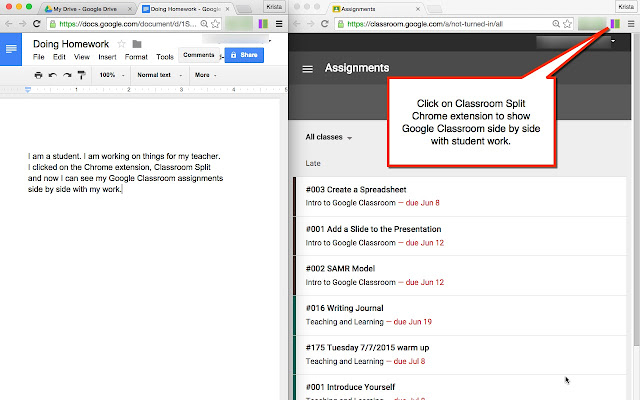
When students are working on multiple tabs in Google Chrome and need to go back and forth between them it might be easier for them to split their screen. Thanks to Alice Keeler they can now do this! Today I had students download the extension AliceKeeler Classroom Split to make this happen. When students are working in their hyperdocs during reading this might be something they want to use. This way they can have their directions open on one screen and their work opened on another. Splitting the screen allows students to be more productive and efficient while working. If you do not have chrome you can create side-by-side windows. Learn more about that here!


Many of the students reading classwork is done in Google Classroom. I encourage parents to take an active and vested interested in their child’s work. You can ask your child to show you his or her Pax and hyperdoc work at home! Some students will be sharing their work at conferences, but it is available to you at home any time you want to look at it! Conversing with students about the books we are reading and how we are exploring books is another wonderful discussion point with students. If you do not know what a hyperdoc is visit this site to learn more. These have been an enriching experience for students and I to discuss books together.