Friday, October 7, 2016

Life Lessons from Madonna

Madonna’s life lessons entered our classroom again today as we explored the story of Mr. Peabody’s Apples. This is one of my favorite stories as it brings so many enriching conversations into the classroom. The story is about a boy who plays baseball and loves his coach. In his small town everyone knows each other. One day one of the players sees the coach take an apple from the market and not pay for it. He tells his friends who tell their parents, who tell others. Soon no one is showing up for ball games except the protagonist who explains to the coach everyone thinks he is a thief. The two go to the store where the reader learns the coach actually pays for the apples ahead of time. I am sure many of us have been in situations where we see things and make assumptions. It is what we do with these assumptions that shows our character.

Students talked about how the boy who thought the coach was a thief could have
a.     gone and talked the coach directly to see why he did not pay for the apple
b.     gone and discussed what he saw with the shop keeper
c.      not said anything to anyone

If he had done any of those three things he would not have found himself with the coach and a pillow. The coach asked him to cut the pillow and spread the feathers into the wind. The boy thought he got off easy until the coach suggested he pick up all the feathers, which is the same as undoing the damage of spreading the rumor. Students and I discussed how the only person you have the right to talk about is yourself. If you do choose to tell someone something remember it is out there as not everyone keeps things to him or her self. Also, we talked about if you do spread a rumor be ready to own it. Taking responsibility for actions is a huge life skill. Students admitted to spreading rumors or being the rumor, so they all connected to the tale of Mr. Peabody.

We then talked about admitting things. I think back to how much more trouble I got in for lying about something I did then had I just admitted to what I did. I suggested students work on just being honest the first time around. It might work out better for them in the end.

Later in the day during Pax I heard a student say to another classmate, “You ruined it for me.” I happened to call him over and asked what was ruined. He told me Pax died. Now I read the story and have no recollection of that happening, so I asked him where he heard that. The student who told him came over and I asked the student if he even read the book. He had not. He told me he was dared by another student to read the last page, but skimmed it quick. So we called the other student over and none of them had really read the page and made an assumption. We talked about many students in the class would be upset if they all heard Pax did not make it, and they realized how this could have effected classmates. So tying this back to Mr. Peabody, I was proud the students admitted and took responsibility for what they said. They also saw it would be hard to collect all the feathers if the rumor had spread.


Who knew Madonna could write such prolific tales with life lessons to help students grow on their journey? You decide for yourself! Listen to Madonna read her tale! 


Thursday, October 6, 2016

What do PIE, writing, and amusement parks have in common?

If you know anything about me you will know I abhor amusement park rides. I remember the giant, rickety roller coaster at Paragon Park. I was never going on that THING. Instead I chose to laugh my way around The Whip. I am still the person who would rather stand at the exit waiting for everyone else to disembark, seeing the dazed faces that went in so calm. When it came time to introducing the three types of writing to our students the best way I knew how was the one thing I am not a huge fan of- amusement parks.

We discussed the three purposes of writing: persuade, inform, and entertain (PIE). These types of writing are more formerly known as Argumentative, Expository, and Narrative.  I told the agents one of the things we all need to work on is expanding our stories using elaborative details. I gave them a story plot- protagonist goes to an amusement park, eats too much, and goes on a ride. We want to describe the ride. So we are pulling a piece of the story out to show our readers.

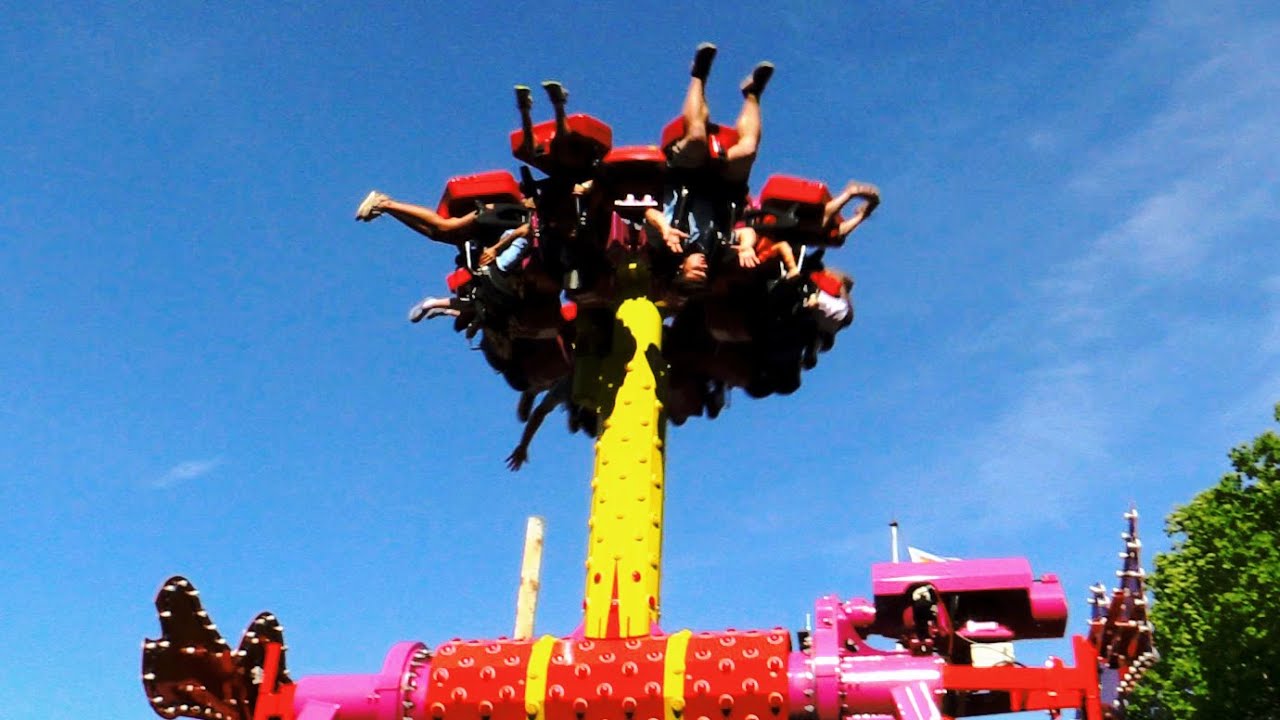
I Googled amusement park rides and found a great video from Quassy, which is near my sister in CT. We watched a portion of the video which helped me model for students how to craft a paragraph. I talked about first person point of view (using I) vs. third person point of view (he, she). I then started typing about a ride I will never go on. The students noticed I included figurative language such as similes and personification.


Bruno approached the towering Frantic ride, and his heart was beating like a drum. His stomach began to do somersaults. He could see the fire engine red paint and hear the screams of riders. As he waited patiently for his turn his mind began to race. The next thing he knew he was strapped into his seat and being lifted into the air. The world went upside down. The wind rustled his hair as loud gasps came out his lips. Upside down! Around! Left! Right! Dizziness blanketed him. Suddenly Bruno was circling in the air going faster and faster. He was blinded by the yellow pole and was thinking, how does a ride that looks like lego pieces make me feel so sick!

I then told the students to think about a ride and gave them the following directions. Several were disappointed they could not write the paragraph right away, but I explained to them writers need to plan.
  1. Choose your own ride
  2. Make four lists about your ride
    1. What does it look like
    2. What do you hear?
    3. What do you feel?
    4. Make a simile and personification for your ride
Using their imaginations and Google image search students began to envision their own ride to describe. We will take these rides through other forms of writing, persuading someone to go on the ride and comparing and contrasting our ride to another classmate’s ride.

We also delved into Madonna’s books today. A student happened to say she had no idea Madonna even wrote books. I have to say they teach really good lessons. Today we ready The English Roses, which teaches readers to not complain about their own lives and to put things in perspective. We also talked about how you never truly know what is going on in the lives of others so no reason to be green with envy over what others have. I highly suggest checking out her books. They are great family reads!


Wednesday, October 5, 2016

The Lens of Science

Students need hands on experiences to explore and engage in science concepts. We had a science lesson on owl pellets this morning, which gives students insight into the ecosystem the owl lives in. Students examined an owl pellet and found evidence of what the owl has eaten. This shows the food chain of the owl. Our young scientists had a blast exploring their owl pellet, making new discoveries. If you are wondering what an owl pellet is, here is a good answer for you:

 Owls are birds of prey. That means that they hunt the animals that they eat. After an owl eats the small rodents, birds, and bugs that are a part of its nightly diet, its stomach cannot digest the fur, bones, teeth, feathers, and insect shells from that food. These "extra" parts are formed into a tight PELLET inside the owl and are then are later SPIT UP by the owl. Pellets are usually about as big as an adult thumb and they are often dissected by students and scientist to help them learn exactly what owls eat and what kinds of small animals and bugs live in a particular area. If you get a chance to examine what is inside an owl pellet, you will be lucky, there is a lot to learn and it is surprisingly FUN!

We kicked off our lesson like real scientists would, gathering supplies and making predictions. Students needed to think about what biotic and abiotic factors are in an owl’s ecosystem. We watched a short video about owls thanks to PBS learning media! We also saw you could dissect a virtual owl pellet at home! I love the look students first get when they see an owl pellet. They don’t know if they should be excited or repulsed. Regardless the conversation about what they find in their pellet is amazing as students begin to construct knowledge of how an owl lives and interacts with its ecosystem. Students learn more by doing! We are lucky to have these learning experiences where students can engage, explore, and reflect.

See photos in our class Google photo album or social media accounts.


Thursday, September 29, 2016

The Story of the Water Princess

The Water Princess tells the story of a young African American girl who has to travel 4 miles every day to get water for her family. The water sadly is not clean, yet the family uses it to drink, bathe, wash clothes, and cook with. The dynamite author and illustrator team of Susan Verde and Peter Reynolds bring a story inspired by Georgie Badiel into the hearts of readers. 


Olivia and Charles shared, “To know they had to travel that far to get a bucket of water when we can go to a sink is sad.” Julia and Marissa added, “The story makes me want to help them.” Sophia said, “The story made me feel selfish as we take advantage of what we have.” Jake feels “bad knowing all the stuff we have and knowing the struggles they have.”


Katie mentioned, “We cannot take everything for granted.” Zoe learned “not everyone has what we have.” Rayyan wanted us “to always be thankful for the things we have because not everyone has what we have.” Maddie reminded us “hard work is always worth it.” Charles suggested people could “donate money to build wells for clean water.” Visit the GeorgieBadiel Foundation to help their cause! You can also check out the Ryan’s Well Foundation. 


Tuesday, September 27, 2016

Never Again Making Assumptions about Student Technology Use

In the course of the past few days I have discovered the importance of not making assumptions of students technology skills. I had figured most students knew how to log onto something and understand how to navigate websites. I also thought students would know what a tab was. In seeing the confusion in the eyes of those I directed to open a tab or how to make a capital letter I have now realized how much growth my students will have this year in their technology skills. Encouraging students to use Google classroom, Google drive, and Google search tools is just the beginning of our adventure into navigating technology together. Jumping right in seems overwhelming and probably a bit scary for us all, but these tools are things students will need to access their whole lives.

tabs


So I decided it is important to go back to basics and teach students tech 101 of how to navigate various tools online. I also learned the value of checking in with students to see what they know and need to know. I also want to encourage students to take more risks and figure things out on their own. Many are hesitant to push or do things on their own. I want them to learn by doing. Tomorrow I will be showing students what tabs are as well as some keyboard shortcuts thanks to my guru, Alice Keeler. I am also going to remind them to play around with these tools when they can. See what each Google product can do for them. I want them to think, How can this enhance my learning? What will this help me with? What else could it be used for?


I know I think those things every day!  

Monday, September 26, 2016

Give Yourself Permission To Listen to Books Digitally


Students need to have access to books in order to build their literacy skills. I spend a lot of time explaining to students over the summer who dread summer reading it is okay to listen to books on tapes. Parents mouths go agape, shocked to hear this is ok. I think any way students can be exposed to text (books, newspapers, magazines, play scripts, comics, etc.) and helps foster a love of reading works! I worked hard to build a classroom library that provides choices to students at various reading levels. Students have also shared they use various apps at home on devices to get books in their hands. I do think one of the best ways is to hold a book but I am guilty of reading mostly on my IPad.
 Image result for tales2go
One of the ways students can access books at home this year is through their Tales 2 Go Account. We did a test drive of this wonderful resource in class yesterday, and I had sent home log in data for this day one. Students are aware of their at home user name and password (or should be). I love how students can choose various forms of text and listen to stories. Stories can be sorted by grade level or students can search for things they are looking for. I saw students listening to various genres of text, some laughing out loud at the fiction story they chose. Others visited stories by favorite authors.

I asked students about why kids should use Tales 2 Go.  Here is some of the feedback from our users.

Marissa said, “If they do not feel comfortable reading stories in their head it is better to listen to it online. “  Shawn shared, “If kids do not like reading so much this tool could be used. If a child feels they are not reading fast enough this helps hear someone who is fluent. Olivia told us, “If someone already read the book but did not understand what they are reading they could go on there and reread it. It also helps with words they do not understand.” Sophia added, “Students should use Tales 2 Go because students find it more appealing to do things on electronics or computers because it seems like more fun, and as a student it is more fun! Emma finished our conversation but saying, “Students should use this because you can read books that you cannot find in a bookstore. You get experience with other people reading to you too. “


To learn more about Tales to go and see tutorials click here.